Tim | 8 janv. 2026
Why I’m Looking Forward to the New Harry Potter Series
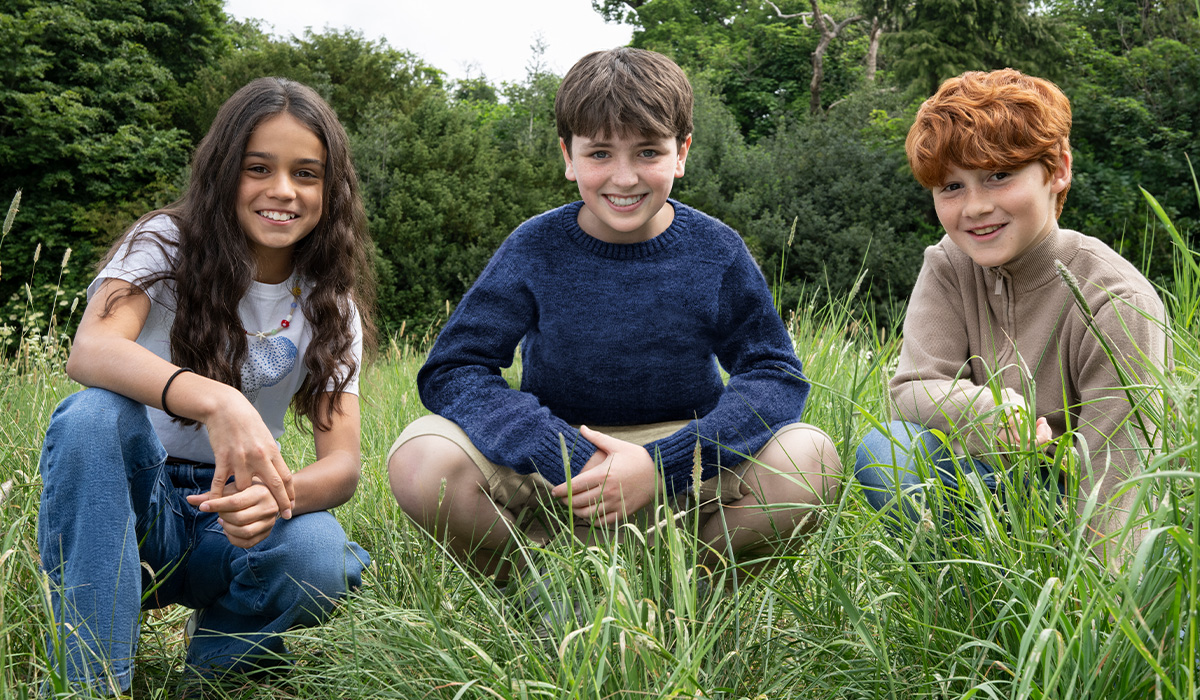
The announcement that HBO is making a Harry Potter series didn’t exactly spark universal cheers—to put it mildly. I (Tim), on the other hand, have always believed that more content, sequels, and reboots are absolutely fine, as long as they deliver quality and actually have something to say. And judging by HBO’s track record, I’m feeling genuinely optimistic about a new take on the story of the Boy Who Lived.
So, in a completely subjective spirit, here are seven reasons—maybe I should call them hopes and wishes?—why I’m looking forward to the new Harry Potter series. (Fair warning: there will be spoilers. Lots of them.)
1. A Coherent Story And A World That Makes Sense
The biggest advantage the series has over the films is obvious: all the books already exist. And not just the novels themselves, but also years of additional lore—explanations about the story, the characters, and even small details like wand mechanics—that J.K. Rowling has released over time. Let’s be honest: you can feel, at every turn, that the films were made before the full story was finished.
With today’s knowledge, many important plot points can be planted right from the start—ideally teased in a way that makes the payoff later on much more satisfying. The prime example here are Voldemort’s Horcruxes, which were introduced very quickly in the films and were not particularly well explained. The Deathly Hallows, too, could be foreshadowed early on, even if it’s just via details like a copy of The Tales of Beedle the Bard lying around. Concepts like Occlumency are also much easier to pull off if you establish early that Harry feels like Snape can read minds—just like in the books.
That knowledge advantage also helps enormously with worldbuilding, because the rules of the magical world can be woven in much more organically. For example: there’s no reason why, say, in season four—when the Summoning Charm Accio becomes relevant—you couldn’t casually mention that you can’t conjure food (or other things) out of nothing, instead of only explaining it much later when the trio suddenly needs that information in Deathly Hallows.
2. More Time For What Matters—And For What Doesn’t
The second obvious advantage of a series is time. You can fit a lot more into ten hours of Harry Potter and the Philosopher’s Stone than into a two-hour movie. That alone could fix several scenes from the films that always felt incredibly rushed to me—especially the showdown in the Shrieking Shack in Prisoner of Azkaban, but also Voldemort’s rebirth in Goblet of Fire. These are huge moments in the books, and with more time, they could finally get the impact they deserve. The same goes for seemingly small things, like the magical mirror Sirius gives Harry. There’s so much potential there.
Each book is supposed to get its own season, which generally means more room for everything—but even then, the showrunners will have to make smart choices. Order of the Phoenix alone has over 1,000 pages, which is a challenge even for a full season. I don’t necessarily need everything from the books, and I’d actually welcome a few surprises. That said, I do have a small wishlist:
- At least one dedicated episode about the Marauders, including lots of background on the First Wizarding War
- “The Other Minister” chapter from Half-Blood Prince
- More Dobby—if only so his death actually hurts later
- Winky and/or the Hogwarts kitchens. Maybe even S.P.E.W.?
- Peeves the Poltergeist
- The Quidditch World Cup, including Ludo Bagman
- More classroom scenes, which were sorely lacking in the later films
- The Hogwarts portraits and how they’re connected to the wider world (plus Sir Cadogan!)
- The Rita Skeeter subplot
3. One Consistent Visual Language For The Entire Story
Visually, the films are kind of all over the place—which is understandable, given that different directors brought very different approaches and were also telling very different kinds of stories. The first two films share a cohesive look and feel like the children’s movies they were meant to be. After that, everything just gets progressively darker. That does fit the books, which also grow more mature—but what I’m missing is a consistent visual style that carries through from start to finish.
Everyone’s entitled to their own opinion here, but for me, Prisoner of Azkaban is the best reference point. It’s the first—and only—Harry Potter film that feels completely distinct and artistically bold. Its version of the wizarding world was wonderfully dark and mysterious without going overboard. A visual style like that, applied across all seasons but with stories closer to the books, would be ideal.
4. Paapa Essiedu As Professor Snape
The casting of Severus Snape has been discussed very controversially—and that’s precisely why it makes me excited for the series. Not because I dislike Alan Rickman (everyone loves Alan Rickman!), and not because I’m already convinced Paapa Essiedu will deliver the perfect Snape. Simply because I’m genuinely curious to see what they’ll do with the role.
Whether it turns out great or not almost doesn’t matter to me—what matters is that they’re daring to try something. And with HBO, I’m cautiously optimistic. For me, taking a risk is the only way to make Snape interesting again. A Rickman copy would be doomed from the start, and the only thing worse would be a bland, forgettable interpretation no one remembers.
5. Characters As They Are In The Books
This isn’t a continuation of the “We’ll take the lot" section above—it’s more of a plea to take a really close look at the many great characters from the books and do them justice this time. Because in that regard, the films stumbled more than once. Three characters, in particular, desperately need a rethink:
Albus Dumbledore: I have nothing against Richard Harris or Michael Gambon. But this central figure—equally powerful, brilliant, and delightfully eccentric (he loves chamber music, damn it!)—needs to be much closer to his book version. There, Dumbledore has an immense presence despite us rarely seeing him perform magic or learning much about him. He’s charismatic, intimidating, and deeply lovable at the same time. The series needs to capture that—and not just for one episode, which would be the equivalent of what the films did. If they succeed, it also becomes far more compelling to later tarnish his legacy, for example by incorporating Rita Skeeter’s The Life and Lies of Albus Dumbledore and letting Harry doubt everything.
Ginny Weasley: Self-explanatory.
Draco Malfoy: Careful—I’m not saying Tom Felton did a bad job. He was fantastic. What the films largely left out, though, is Draco’s redemption arc. Without it—and without his family’s last-minute switcheroo before the final battle—Harry wouldn’t have won. Bonus points if the series has Draco address his former enemy as “Harry” instead of “Potter” in the epilogue.
If they get these three right, I’ll already be happy. Still, there’s a lot of untapped potential left. And since it’s been a couple of paragraphs without a list, here’s another one:
- Neville Longbottom: more backstory, more room for slow character development, and that hospital scene
- Viktor Krum and Fleur Delacour deserve to be more than caricatures
- Cedric Diggory and Cho Chang were cool in the books, weren’t they?
- Percy Weasley: an entire unused story arc just waiting to be used
- Tonks and Lupin: it would be nice if their deaths didn’t leave me cold again
- Garden gnomes. No idea why—I just like them
- Bonus: I’d love it if the characters were the correct ages. Especially Snape and Harry’s parents were way too old in the films
6. Voldemort’s Demise
I always felt that, in the end, the filmmakers cared more about epic spectacle than about the message. Actually, that’s too neutral. For the sake of spectacle, they completely flipped one of the most important scenes in the books on its head. In the source material, it’s essential that Lord Voldemort does not die in a bombastic explosion or some dazzling visual effect. Instead—let me just quote the book:
"Tom Riddle hit the floor with a mundane finality, his body feeble and shrunken, the white hands empty, the snakelike face vacant and unknowing."
Tom Riddle was powerful, yes. He went further than almost any wizard before him. And yet, there were fundamental things he never understood. All his hunger for power and all his experiments didn’t make him immortal. In the end, he couldn’t prevent the thing he feared most. He died like everyone else. Compare that to the films, where he slowly disintegrates like a screensaver. That always bothered me. The filmmakers really should have listened to more Daft Punk: Human After All.
7. Bonus: The HBO Factor
Okay, I’m mostly writing this to get to seven reasons—because seven is the most magical number, after all. But there’s truth to it: HBO has repeatedly shown a willingness to push boundaries, to surprise viewers, sometimes even to shock them. No, I don’t want Harry Potter to turn into a horror series—but I do hope for a few bold decisions I can’t see coming yet. Like the casting of Professor Snape. Now they just have to deliver on the storytelling, too. I’m curious.