Tim | 30 juin 2026
10 Years of Pokémon Go, or: How Lightning Struck Twice
One of my most formative gaming experiences wasn't in front of a TV or a PC, but on the schoolyard. I remember exactly how a few kids – not many, mind you – would meet in a shady corner, dig out those way-too-short Link Cables, and fire up their Game Boys. And then, for the whole recess, and sometimes even longer, we’d trade the Pokémon we’d caught in Red and Blue or battle each other.
That might not sound like much today. But being able to share your Pokémon obsession with others in that way—and outside, no less—was groundbreaking! Pokémon was destined to pull off something similar, but even more ground-breaking, many years later. And this time, it wouldn’t just be limited to a few kids at school. Let’s take a look back at ten years of Pokémon Go!
Childhood Dreams in Your Pocket
To the pop-culturally illiterate, it must have been a strange sight back then: groups of people gathering in the strangest places, but barely speaking to each other. They weren't blasting music or holding up witty signs. No, they were just standing there, staring at their phones, maybe getting excited for a moment, and then moving on.
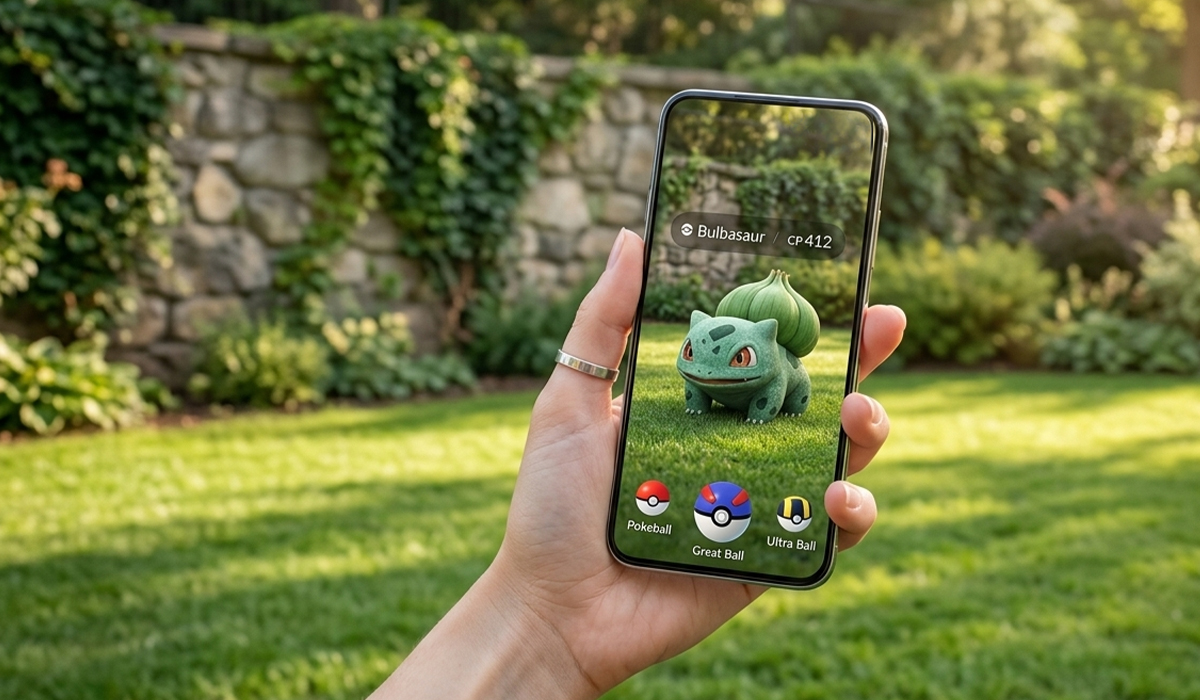
But for Pokémon fans, it was the fulfillment of a childhood dream: that Pokémon actually existed in our world! Well, digitally at least. And that was one of the great achievements of Pokémon Go: the way it so cleverly blended the digital fantasy world of Pokémon with the real world. And it happened at exactly the right time, when everyone had a smartphone with GPS and a decent camera in their pocket. You just had to download the app, and the hunt for Pokémon began—in your city, in the woods, wherever you happened to be.
The concept was based on Ingress, the first mobile game from developer Niantic. That was also an augmented reality game where gamers had to walk to specific locations in the real world to influence the virtual one. But the concept only became a mass phenomenon through the charm of the little pocket monsters. Well, at least once it actually worked...
Nearly Falling Off the Bandwagon
When I first heard about Pokémon Go, I immediately jumped on the bandwagon—and fell straight back off. In my memory, nothing worked at the beginning. That was probably due to the hype and the overloaded servers. But that didn't matter to me; I was just annoyed that the app kept crashing, my battery was dead after a perceived fifteen minutes, and the strange places I was sometimes supposed to travel to... I was disappointed and deleted the app.
Luckily, I gave the game another chance a few weeks later; the hype was still unbroken. And lo and behold: much of it had been fixed! And now, I was hooked, too. Because the core idea was and is unbeatable. By that, I don't just mean the hunt for Pokémon, but also the random encounters with other players. Or how you constantly found new ways to optimize yourself, like making clever use of stops during your daily bus ride. Above all, however, Pokémon Go was a revelation for my dog. He didn't care about the Pokémon, but he was happy that we were suddenly taking completely different and much longer walks!
Insensitivity and Traffic Warnings
I mentioned that at the beginning, Pokémon appeared in some strange places. In my case, it was mostly just meadows where a fence kept me from the next Pokéball throw. But there were other cases where Pokémon fans seemed to forget that they were out in the real world. Restaurant guests sitting outside were disturbed, people cheered loudly in cemeteries, and some even stopped at nothing—not even memorials for the victims of the Second World War. Privacy advocates were concerned about recorded movement profiles, while the ADAC, Europe’s largtest automobile association, issued warnings because pedestrians and drivers alike were distracted by the hunt for monsters.
A One-of-a-Kind Hype
But for all the valid criticism: Pokémon Go was a fantastic experience that I wouldn't want to miss. And above all, a mega-success! By 2024, the app had been downloaded almost 700 million times. In 2023, seven years after the launch, Pokémon Go still had around 55 million active monthly players. The revenue to date is over 7.5 billion dollars!
No wonder others wanted a piece of that juicy pie. But no other game quite managed to replicate the fascination or success of Pokémon Go. It wasn't for lack of trying. Niantic themselves started several attempts, such as Harry Potter: Wizards Unite, Pikmin Bloom, or Monster Hunter Now. But in the end, Pokémon Go was probably just the right idea at the right time. And of course, the one with the right franchise: After all, Pokémon fit so organically into our world. And now I’m curious to see if the little monsters manage to create another such new multiplayer experience. I, for one, wouldn't put it past them.